Additional Information
Program Mission, Goals, and Student Objectives
Mission Statement:
The Medical Laboratory Technician Program, with the assistance of its clinical affiliate laboratories, is committed to providing quality didactic and clinical instruction, encompassing the cognitive, psychomotor, and affective domains of learning, to prepare its graduates to work upon career entry as competent medical laboratory technicians in health care facilities in East Tennessee. The program is committed to meeting the employment needs of medical laboratories and to providing quality continuing education to laboratory professionals in the WSCC service area.
MLT Program Goals and Student Objectives:
* The MLT Program at WSCC will provide students with the knowledge and skills necessary to competently perform diagnostic laboratory tests.
The student should:
- Apply the knowledge gained in lecture and laboratory sections to the work environment as well as the certification exam.
- Perform routine laboratory testing in each clinical rotation with minimal supervision using both manual and automated procedural techniques
- Strive for accuracy in test performance with minimal errors
*The MLT Program at WSCC will assist students in developing critical thinking and problem-solving skills which are applicable to the medical laboratory’s diagnostic purpose.
The student should:
- Recognize irregularities in test results and make corrections according to laboratory strategy and criteria
- Recognize instrument errors or failures and take appropriate action
- Correlate laboratory data in order to confirm or disprove a diagnosis
- Demonstrate and explain routine procedures to others in the clinical laboratory
- Adapt to various work environments and situations efficiently
*The MLT Program at WSCC will assist students in developing effective communication skills with fellow laboratorians as well as other medical professionals.
* The MLT Program at WSCC will strive to provide the foundation for professional growth, career advancement, and life-long learning.
* The MLT Program at WSCC will strive to produce graduates who can adequately meet the needs of the medical laboratory communities by practicing with honesty, integrity, and ethically.
Academic Information
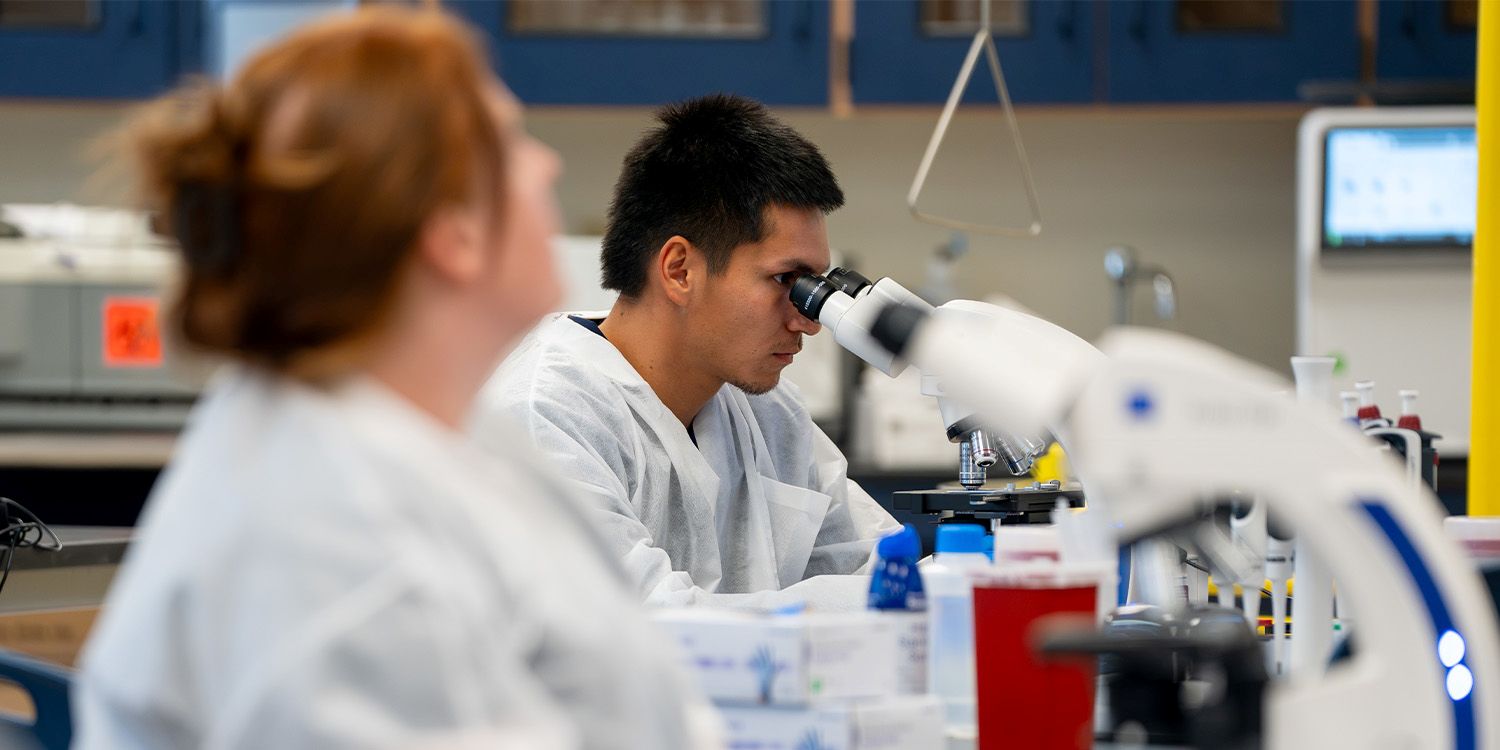
The MLT Program except for clinical rotations are taught on the Walter’s State Community College Claiborne campus in Tazewell, TN. Clinical rotations take place in area hospitals or clinical facilities. Located in Tazewell, TN, the college's overall mission is to provide leadership and academic opportunities to its entire service area. This extension offers day and evening academic credit classes and non-credit classes/training in cooperation with the Community Education Program. Classes provide lifelong learning opportunities to individuals seeking to attain career and personal development goals; consequently, these individuals are better-equipped to cope with the realities and problems arising from rapidly changing patterns of living and employment. To further its commitment to community responsiveness, the campus cooperates with other community agencies to provide training facilities for groups with specific needs. Video-streamed classes, web-based, and face-to-face instructional delivery methods are utilized to bring a full range of classes to this rural area.
Housing and Transportation
The college does not provide housing facilities for students either on or off campus. Students must provide their own reliable transportation to and from clinical sites.
Location of the Program
All in-person MLT courses except the clinical rotations are taught on Walters State Community College’s Claiborne County campus in Tazewell, TN. Clinical rotations take place in area hospitals or clinical facilities.
Time Course of the Program
The Associate of Applied Science degree in Medical Laboratory Technology is a 5-semester program of study. The first two semesters, the student is considered a Health Sciences AS major, and coursework consists of general education courses including MLAB 1301 (Introduction to Medical Laboratory Technology). Students may apply for admission to the MLT program while in the spring semester of which all general education course requirements will be/have been met.
The program begins in August each year and students will graduate in December of the following year. Students take an average of 12-13 credit hours each semester. It is highly recommended that students work no more than 20 hours per week while in the program. All program applications must be received by May 15th each year for the following August program start date. The MLT program application can be located at https://apps.ws.edu/health-ap/.
After admission into the program, students are considered to be MLT students and will begin the 3rd semester. The three-semester, full time program of study starts in August of each year. The 3rd and 4th semesters involve didactic courses and student laboratories.
The 4th and 5th semesters are spent in clinical practicum rotations along with didactic courses. Clinical practicum rotations consist of 16-32 hours/week at area clinical laboratories. Students are involved in the educational training to meet requirements of the program and to fulfill requirements of the Associate of Applied Science Degree.
Academic / Program Closure Plan
In the event of MLT Program closure, the “Walters State Community College Medical Laboratory Technician Program Teach Out Plan” is as follows:
- If closure is due to exceptional or uncontrollable circumstances, such as natural disaster, and the college will reopen the program within 12 months, then the students will reenter the program and progress as previously planned.
- If closure is due to exceptional or uncontrollable circumstances, such as natural disaster, and the college will not reopen, then every effort will be made to contact MLT Programs within the Tennessee Board of Regents Community College System to request that students be transferred into other programs.
- If the closure is due to the college’s decision to no longer offer the program, then all enrolled students will progress as planned. No new students will begin the program, only existing students will be enrolled and will be allowed to complete.
Admissions
General Admission Requirements
Admission to Walters State Community College does not automatically qualify a student for admission to the Medical Laboratory Technology program. The number of students admitted to each of the Health Programs is limited. There are usually more applicants than spaces available. Admission to each of the programs is based on several factors including successful completion of the admission requirements. The number of applicants admitted to each Health Program is limited by several factors including: the number of spaces available for clinical training, the predicted number of positions available in the health care industry for graduates, and enrollment limitations imposed by accreditation agencies. In addition, the Medical Laboratory Program class size is governed by the Tennessee Medical Laboratory Board.
Students wishing to enter any Health Programs Degree/Certificate program must have the following on file in the Office of Admissions and Records:
- Completion of high school or GED equivalent
- Application to the College. See Apply to Walters State
- ACT or SAT scores if under 21 years of age
- All high school transcripts or HSE scores
- Transcripts from other colleges attended
- Appropriate Placement Test results (if applicable)
- Other requested documents, records, and tests
Any exceptions to the above policies must be approved by the Medical Laboratory Technology Admissions Committee.
MLT Program Admission
Admission to Walters State Community College does not automatically qualify a student for admission to the Medical Laboratory Technology program. Admission to the program is limited and on a competitive basis. Acceptance is contingent upon completion of the general education core and a minimum cumulative GPA of 2.7 in those courses. In addition, the student must have achieved a C or greater in each general education course listed below.
To be considered for admission into the MLT program, the following criteria must be met:
- Completion of/current enrollment in the following general education courses with a minimum GPA of 2.7 in those courses and a “C” or higher in the individual course.
| FALL (SEMESTER 1) | HOURS |
|---|---|
| BIOL 2010 & 2011- A&P (Lecture and Lab) | 4 |
| COMM 2025 | 3 |
| ENGL 1010 | 3 |
| MATH 1530 | 3 |
| PSYC 1030 | 3 |
| Total =16 Hours |
| SPRING (SEMESTER 2) | HOURS |
|---|---|
| BIOL 2230 & 2231-Micro (Lecture and Lab) | 4 |
| CHEM 1010 & 1011- Introductory Chem (Lecture and Lab) | 4 |
| Humanities/Fine Arts General Education Elective (3 hrs) (Select from the WS Approved General Education list) | 3 |
| MLAB 1301- Intro to MLT | 3 |
| Total = 14 Hours |
- Application to the MLT program is by completion of the on-line MLT Application Form. Applications must be submitted on-line no later than the May 15th deadline to be considered for the full-time MLT program beginning in August.
- Initial health requirement. Hepatitis B vaccination (or waiver), proof of health insurance, color blindness test results, and a satisfactory physical examination are needed before students can begin MLT student labs. Additional health documentation is needed for progression in the program, but these are not needed prior to the first day of the program.
MLT Program Application Requirements
- Complete prerequisites, general education requirements and submission of required documents
- Maintain an overall 2.7 GPA (excluding Learning Support courses)
- Complete the online MLT program application by the application deadline.
- Application, documentation and results of designated admissions test must be received by the health programs department no later than May 15 of the year the student elects to participate in the selection process for the fall semester MLT class.
Selection and Notification
The following is used to determine eligibility for the program and then acceptance into the program:
- submission of program application by the deadline
- completion of prerequisite/core courses with a C or better
- minimum general education course cumulative GPA of 2.7
- acceptable performance in MLAB 1301 including final grade or grade at time of interview
- recommendation letters
Program Withdrawal / Readmission Policy
Withdrawal from the MLT Program
If a student must withdraw from any required course for any reason, he/she must follow withdrawal procedures outlined by the College. He/she should contact the Program Director as soon as possible to be considered for readmission. Readmission is on a space available basis and cannot be guaranteed.
Readmission to the MLT Program
Students must meet with the Program Director as soon as possible to begin the readmission process. Students must reapply to the program and be approved for readmission by program faculty. Request for readmission does not guarantee readmission.
With the exception of the MLT Introduction Course, competency in all previously taken MLT courses must be demonstrated upon readmission to the program. Auditing previously taken MLT courses may be part of the demonstration of competency.
Course work must be completed within a maximum of 5 years from the original admission date.
Clinical Practicum
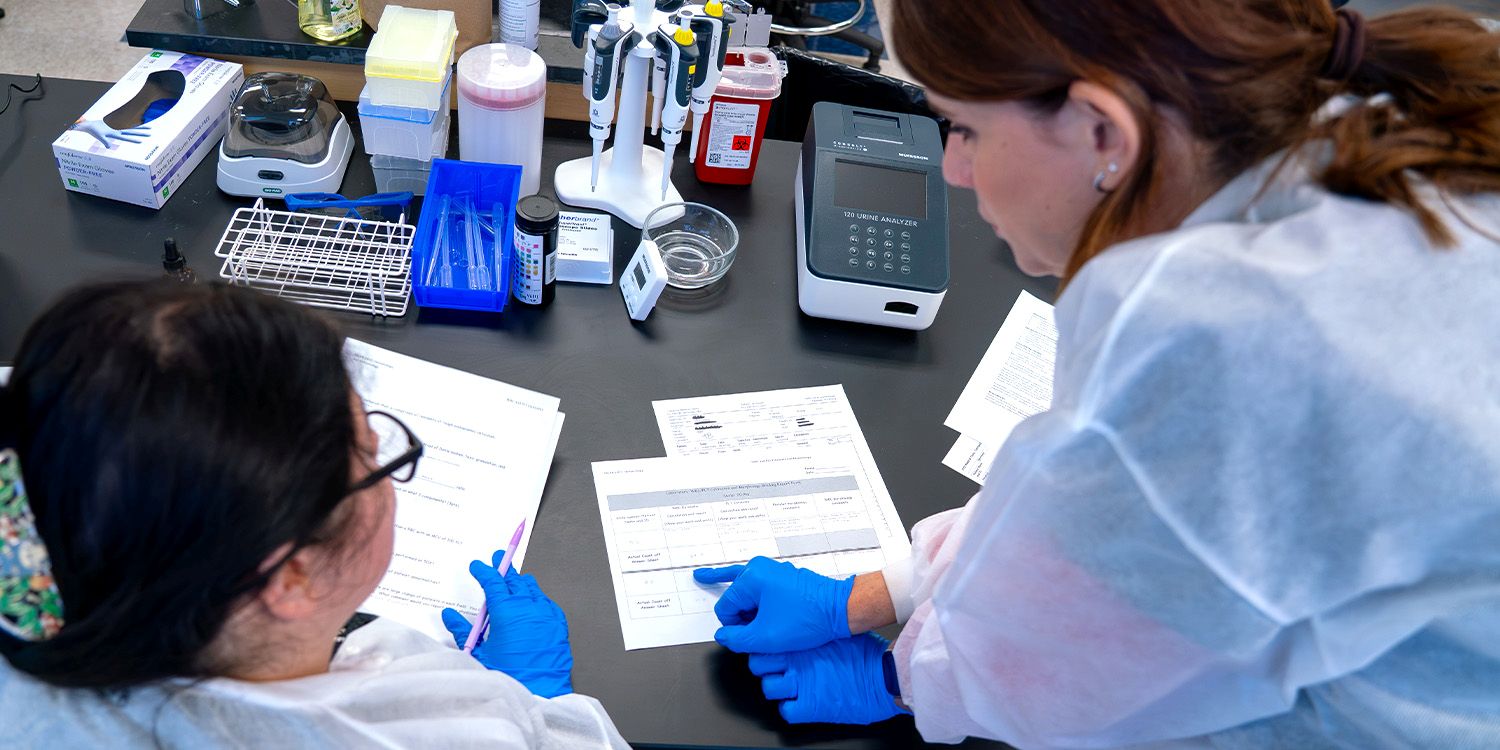
The Medical Laboratory Technology Program requires that the student participate in clinical patient care experiences. Clinical course work allows students to apply the knowledge and skills obtained in the didactic component of the curriculum to real life experience in a clinical laboratory. The clinical courses are to provide students with clinical experience in area hospitals and clinic laboratories. Students may also be provided with real or computer simulated learning activities.
Training students is a very time-consuming endeavor due to the nature of the training required at the bench. Training students slows down the work process in the department during the days that a student is on-site. Students should consider clinical training experiences to be a privilege not a right. Local hospitals, laboratories, and clinics extend the privilege of gaining clinical experience in their setting. Students are to behave according to the professional and affective domain standards of the WSCC MLT program during their clinical rotations. Students will be held to the highest level of work ethics. Excellent participation, reviewing of lecture notes, laboratory procedures, textbooks and attentiveness to instruction provided are high among the expectations.
All student rotations are designed such that students attain entry-level competency in specific laboratory skills. The ultimate goal of each rotation is that the student is able perform entry-level work at the bench with minimum supervision in most areas, regardless of the time or location of the rotation. The Program limits the number of students it accepts so that all students starting the second year will be guaranteed a clinical assignment.
Estimated Expenses
Tuition & Fees
All fees are payable at the time of registration each semester unless otherwise noted in the schedule of classes. Registration at the beginning of each term is incomplete until all fees are paid, and no student may be admitted to classes without having met his/her financial obligations. No student may re-enroll, graduate, or receive a transcript until all accounts are settled. The term "account" includes any indebtedness or obligation to the College. The student's responsibility for any indebtedness or obligation to the College is not relieved by non-attendance of class.
Fees Per Semester
| Category | Terms |
|---|---|
| In-State |
$191.00 per credit hour up to 12 credit hours |
| Technical Access Fee | $15.00 per credit hour up to a maximum of $116.00 (refundable) |
| International Education Fee | $1.00 per credit hour up to a maximum of $12.00 (refundable) (Not assessed during summer semester) |
| Program Services Fee | $20.00 flat fee (non-refundable) |
| Student Government Activity Fee | $8.00 flat fee (non-refundable) |
| Out-of-State Tuition | $331.00 per credit hour up to 12 credit hours $66.00 per credit hour for credit hours above 12* (refundable) eRate is $287.00 per credit hour** |
| Dual Enrollment Tuition |
$191.00 per credit hour up to 12 credit hours Note: Dual enrollment students are responsible for paying the dual enrollment maintenance fee, any out-of-state fees, and any non-refundable miscellaneous / special course fees incurred. |
*Note: In state and out of state tuition are assessed at the per credit hour rate for all hours registered during the summer semester. Students do not receive a discounted rate for credit hours above 12.
**To qualify for the eRate, out of state students must be identified by the Admissions Office as enrolled in ALL online courses. Out of state students who enroll in a combination of both online courses and other types of courses are not eligible for the eRate. Additionally, out of state students who enroll in a combination of both online courses and other types of courses and then subsequently drop the other type of courses, are not eligible for the eRate.
TN eCampus Course Fees
| Category | Terms |
|---|---|
| In state tuition | $191.00 per credit hour (refundable) |
| Online Course Fee | $76.00 per credit hour (non-refundable) |
| Out-of-State tuition | $331.00 per credit hour (refundable) |
| Technology Access Fee | $15.00 per credit hour up to a maximum of $116.00 (refundable) |
| International Education Fee | $1.00 per credit hour up to a maximum of $12.00 (refundable) (Not assessed during summer semester.) |
| Program Services Fee | $20.00 flat fee (non-refundable) |
| Student Government Activity Fee | $8.00 flat fee (non-refundable) |
Miscellaneous Non-Refundable Fees
| Category | Details | Cost | Terms |
|---|---|---|---|
| Returned Check Fine | Applies to each returned check | $30.00 | per returned check |
| Special Course Fee | Music - individual instruction | $45.00 | per credit hour |
| Lab Fee | $15.00 | flat fee | |
| Allied Health Fee | $25.00 | per credit hour | |
| Culinary Arts Fee | $20.00 | per credit hour | |
| Culinary Arts Special Problem Course Fee | $50.00 | flat fee | |
| Online Course Fee | $25.00 | per credit hour | |
| Deferred Payment Plan | Service Fee | $25.00 | per plan per semester |
| Dual Enrollment Access Fee | Applies to dual enrollment students | 5% | per credit hour in-state tuition charge |
